Pedagogical Approach to Theatre
I Teach Acting

My Pedagogical Approach to Teaching Acting
My mission is to help my students master the ability to make the audience believe them. Acting is a journey that requires empathy, confidence, and truth. My goal is to inspire each of my students to believe in the validity of their ability to tell stories that are authentic. Inspiring my students to tell authentic stories requires me to create a space where they are empowered to take risks and explore identity. Creating a safe environment is my top priority. All students are encouraged to build community and hold space for their counterparts. Building a community while learning acting techniques will serve them both on and off the stage. Teaching acting is about more than creating perfect performances—it’s about creating whole expressive people who will be courageous anyway.

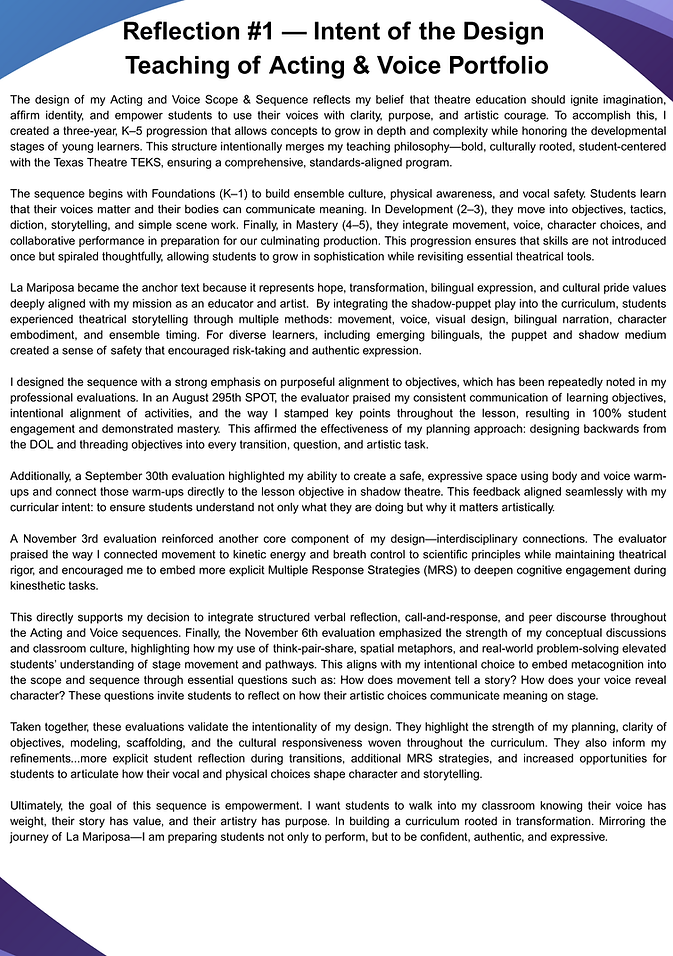

LESSON PLAN 1 — OBJECTIVES & TACTICS (ACTING)


Scenario Cards


LESSON PLAN 2 — CHARACTER DEVELOPMENT (ACTING)




I Teach Voice


My Pedagogical Approach to Teaching Voice
"Before students can project their voices on stage, they must first believe that their voices are worth hearing."
This belief anchors my approach to teaching voice. I view voice not just as a technical skill, but as a pathway to confidence, identity, and self-expression. My goal is to give students permission to speak up, take space, and trust the power of their sound. Voice is identity. Every child carries rhythm, culture, and truth in their sound, and my teaching helps them reconnect with that through breath, movement, and imagination. Vocal strength begins with inner confidence, and I teach students to use their voices with clarity, intention, and meaning.
Voice work in my classroom begins with playful exploration—breathing exercises, tongue twisters, mirror work, and sound discovery. From there, we build articulation, resonance, and expressive tone through poems, monologues, and character work. Students learn how pitch, tempo, and volume shape storytelling, and they use movement-based warmups to connect emotion to voice. This approach supports all learners, including bilingual and neurodiverse students.
I intentionally incorporate stories and rhythms that reflect my students’ diverse backgrounds. We celebrate the beauty of dialects and individuality while practicing clarity and intention. Voice training also supports emotional regulation; through breath and expression, students learn to manage nerves, channel energy, and communicate with empathy.

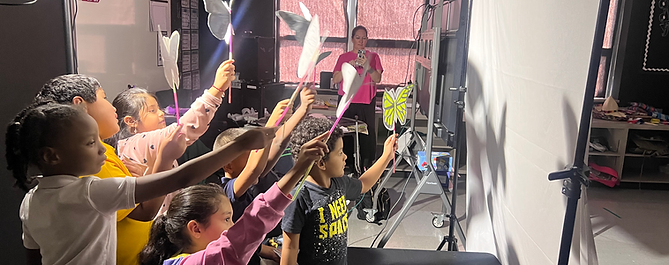
LESSON PLAN 3 — VOICE LESSON (BILINGUAL NARRATION)


Dramaturgy Lesson Plan and Project
Pedagogical Approach to Dramaturgy
My pedagogical approach to dramaturgy is grounded in the belief that...
-
When given accessible entry points all students can engage in meaningful research and critical thinking.
-
Dramaturgy is a bridge between storytelling and real-world understanding, helping students answer the essential question: Why does this story matter?
I’ll admit—my love for research runs deep. I am naturally drawn to following ideas down the rabbit hole, connecting context, culture, and meaning. While I’ve learned to guide that curiosity with intention in the classroom, I model for my students that asking questions and seeking deeper understanding is a vital part of the creative process.
In practice, I translate dramaturgical concepts into student-friendly language by positioning students as “story investigators.” Through interdisciplinary connections, such as linking The Lion King to ecosystems and the Circle of Life, students explore how theatre reflects real-world systems. I also emphasize action-based learning, guiding students to focus on what characters are doing and why, rather than simply how they feel.
Student voice and ownership are central to my approach. Through projects like dramaturgy boards and research presentations, students become active contributors to the storytelling process. These experiences build confidence, deepen understanding, and foster collaboration.
Ultimately, my goal is to empower students to move beyond performance and into purposeful storytelling. Dramaturgy, in my classroom, is not an add-on—it is the foundation that brings depth, relevance, and intention to the work we create together, with just enough curiosity to explore beyond the surface without getting completely lost in the rabbit hole.


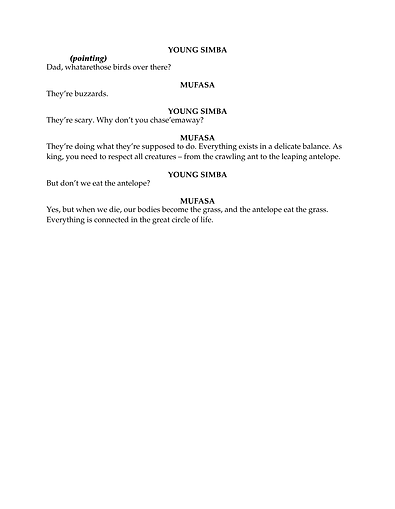


Reflection #1 Bringing Dramaturgy into the Elementary Classroom


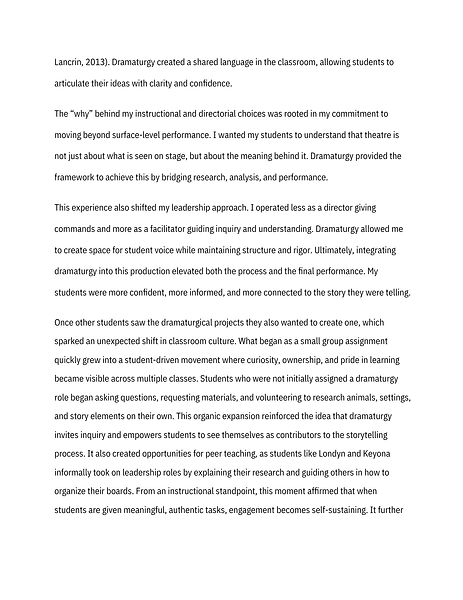
Reflection # Applying Dramaturgy Through Production




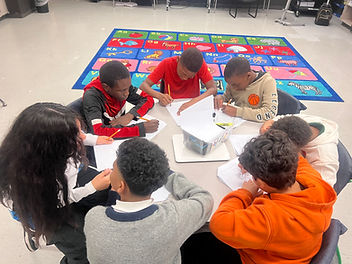
Scholars work independently and in small groups.


My Scenic Design Pedagogy
Pedagogical Approach to Scenic Design
My pedagogical approach to scenic design is rooted in the belief that students should not just build things—they should understand why those things belong on stage. Scenic design, in my classroom, is storytelling with space. It is where imagination meets structure, creativity meets problem-solving, and where a cardboard box can become Pride Rock with the right vision and a little bit of paint.
I approach scenic design as both an artistic and practical discipline. Students are encouraged to think like designers, not just decorators. We start with the question: What story are we telling, and how should the space support it? From there, students learn to make intentional choices about color, texture, placement, and scale. Every piece has a purpose. If it doesn’t serve the story, it doesn’t belong—no matter how cute it is.
Now, I’ll be honest—there is always a moment when a student wants to add “just one more thing” to the set. And while I appreciate the enthusiasm, I teach them early that scenic design is not about putting everything on stage. It’s about making clear, focused choices. We are not decorating a birthday party—we are building a world. That distinction matters.
My instruction is hands-on, collaborative, and rooted in real-world application. Students work with accessible materials—boxes, paper, fabric—and learn how to transform them into meaningful scenic elements. This process builds problem-solving skills, resourcefulness, and confidence. It also reinforces that theatre does not require expensive materials to be effective; it requires vision, intention, and teamwork.
I also emphasize the connection between scenic design and other elements of theatre, including acting and dramaturgy. Students learn that the set is not separate from the performance—it supports it. A well-designed space helps actors make stronger choices and helps the audience better understand the story. When students see how their work impacts the overall production, their level of investment increases.
Culturally responsive design is also a priority in my classroom. When we design for productions like The Lion King, students explore African landscapes, patterns, and symbolism to ensure that the set reflects the world of the story with respect and intention. This allows students to connect design to culture and meaning, rather than surface-level aesthetics.
Ultimately, my goal is to develop students who can think creatively, work collaboratively, and make intentional design choices. Scenic design, in my classroom, is not about perfection—it is about process, purpose, and pride in creating something that supports the story. And if we can turn a stack of boxes into something that makes the audience lean forward and believe, even for a moment, then we’ve done our job.
Scenic Design Anchor Charts

Tools to help students apply what they are learning.


Sample of Scenic Design Projects 5th Grade


Reflection #1 Teaching Students to See the Stage Differently

Reflection #2 From Building Sets to Owning the Stage


